The Arcade That Ate My Studio
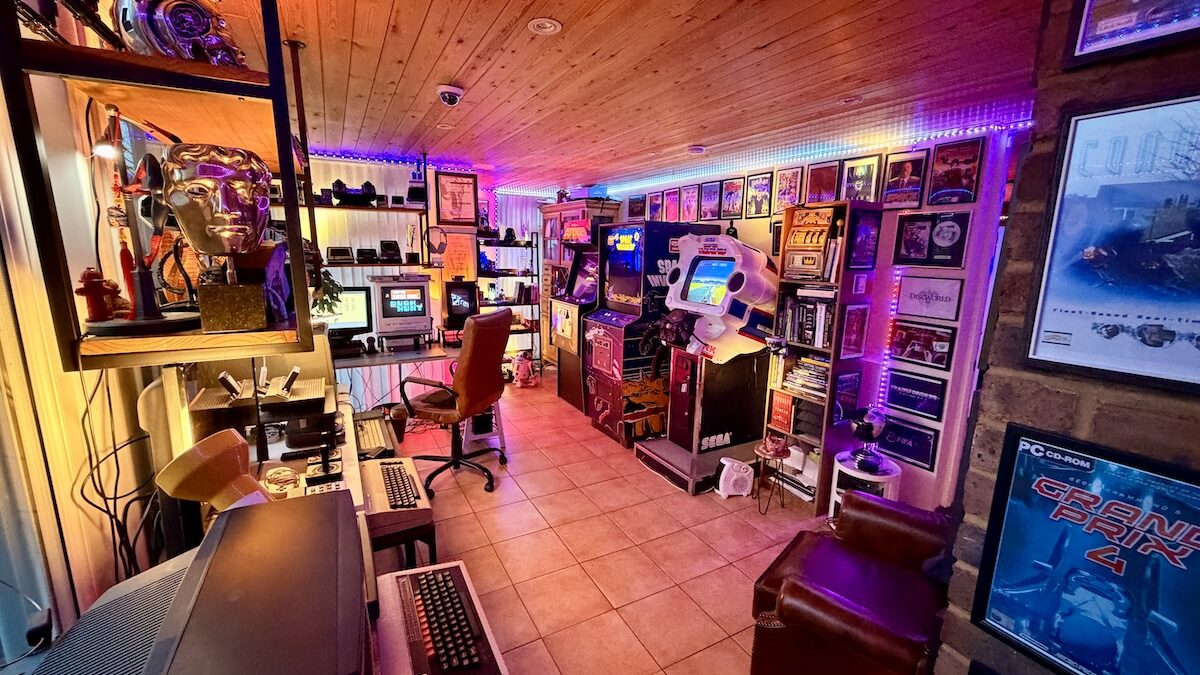

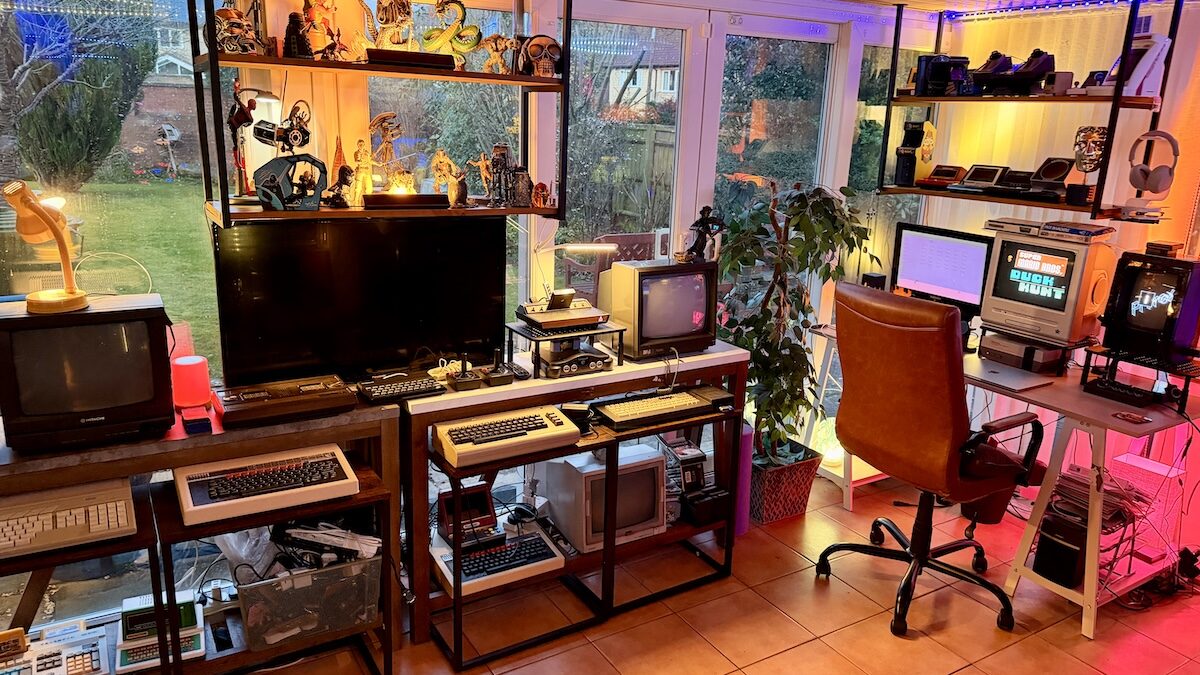

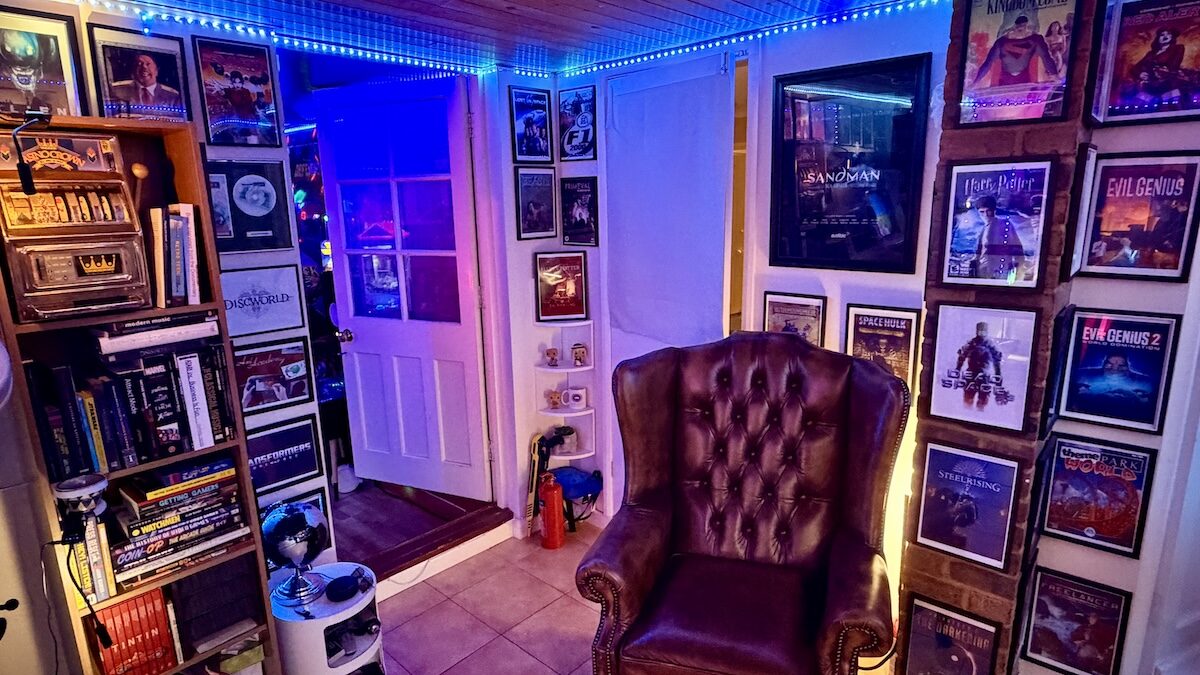

My studio has shrunk over the decades, partly as I’ve taken on fewer projects, but partly because I’ve had less need for racks of synths and outboard gear on a day to day basis. More and more music production happens “in the box” these days, while most of the live recording I get to do from time to time – orchestras and so on – now takes place in other studios. The novelty of a lavish recording studio, showing off racks of analogue synths, wore off for me a very long time ago and has almost completely lost its relevance. Truth be told, it was something I found to be pretty cringeworthy to begin with, much as I adore synths, technology and music production. Music, I like to believe, is largely something you create with your ears and what sits between them, and technology for its own sake can become a huge distraction. You use the technology you need, when you need it.
One benefit of getting older seems to be caring less and less about what others think of me, or what I do with my spare time. So, in recent years, I’ve found other worlds besides music to gradually immerse myself in: some personal, some rooted in my childhood, and other creative pursuits, like writing. (Writing, of course, in an era where nobody reads…)
The synths and instruments are still around, and I love them, but only get wheeled into my studio one or two at a time when I’m on a project.
THEN CAME THE ARCADE
I lay the blame for my cavalier attitude towards arcade machine and old computer acquisition squarely at the feet of my inner twelve-year-old, a socially awkward and troubled boy trapped somewhere in 1983.
And if this already points towards some sort of midlife crisis – which it probably does – then I feel I can at least console myself with the idea that it’s a fairly cool manifestation of one.
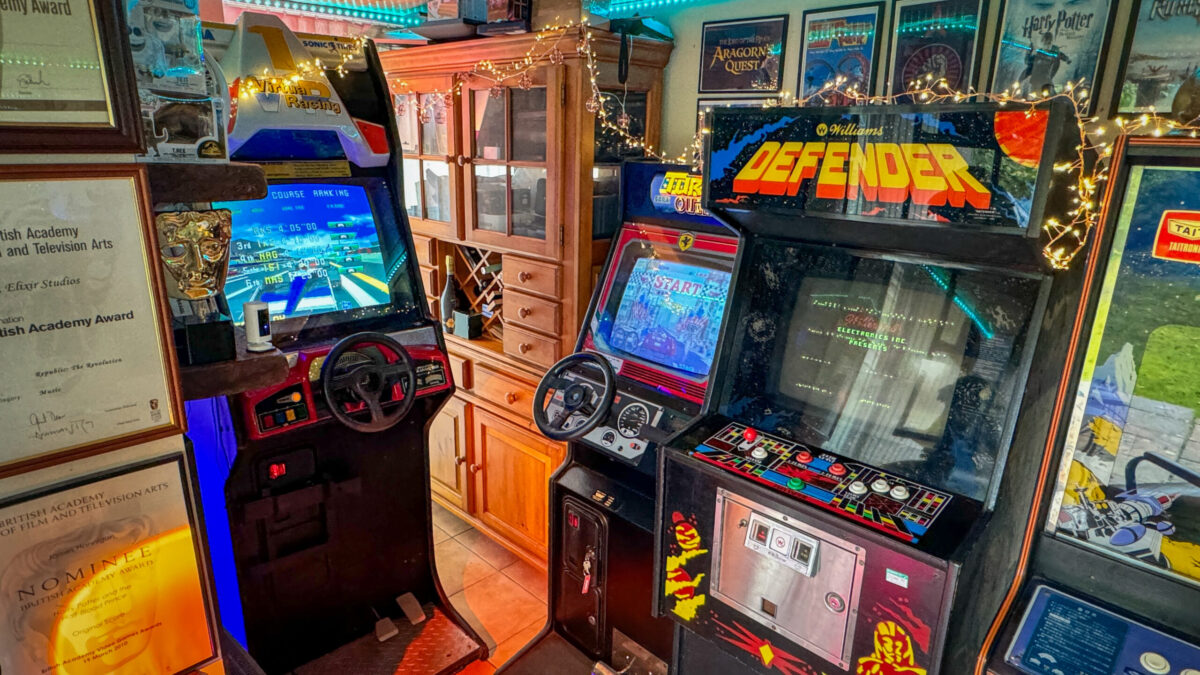
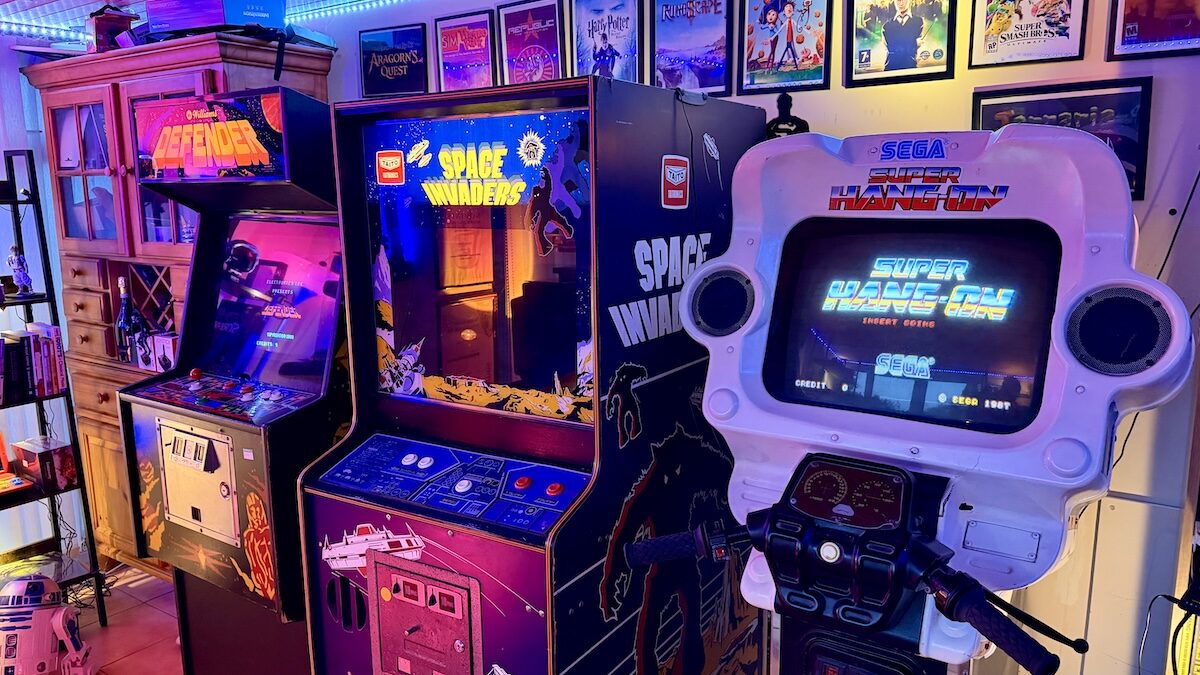
For some, it’s marathon running. For me, it’s garish multi-coloured lighting and games such as Defender and Space Invaders.
Inner child James declared war on his adult self earlier this year, with arcade machines becoming the chosen battleground. Across the decades, young James had screamed at outer adult James to play Atari Star Wars again – believing, naively, that this may transport him back to Bournemouth’s magnificent Pier Amusements during the 1980s.
Child James wasn’t wrong: Playing Star Wars again – thanks to the emergence of a fairly decent ‘replica’ from Arcade 1UP – proved to be a pretty thrilling experience. The familiar yolk, the assault on the Death Star, the glowing vector graphics (albeit rendered on an LCD rather than a CRT monitor), the emulated POKEY chip music and a grainy sampled Sir Alec Guinness are much as big James remembers them.
This kind of midlife-crisis is something of a quarter-life crisis, but for a British person accustomed to pumping ten-pence pieces into coin slots instead, that’s a pretty weak joke.
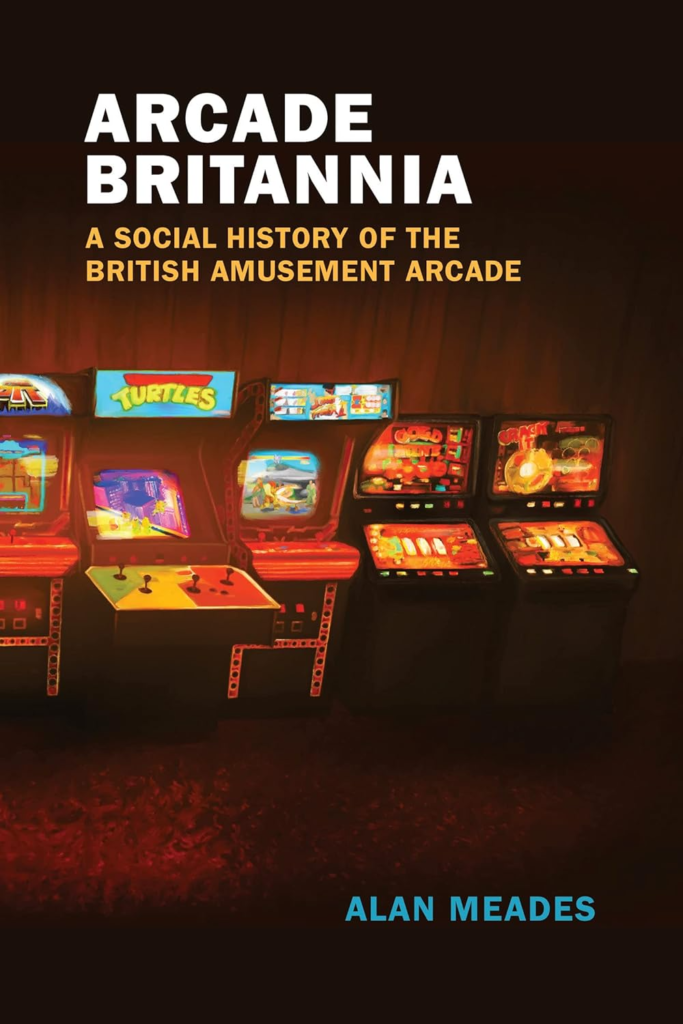
Much arcade paraphernalia – and the culture surrounding it – originated in the US and Japan, even if the British have long had their own unique way of celebrating it – particularly, as I recall, in and around seaside resorts.
I read a wonderful book by Alan Meades on this subject recently, called Arcade Britannia: A Social History of the British Amusement Arcade, which I can wholeheartedly recommend.
VINTAGE OR REPLICA?
At the risk of becoming overly techie, I’ll quickly answer this question by saying that I enjoy both vintage and replica arcade machines – and any retro “re-issue” consoles, for that matter.
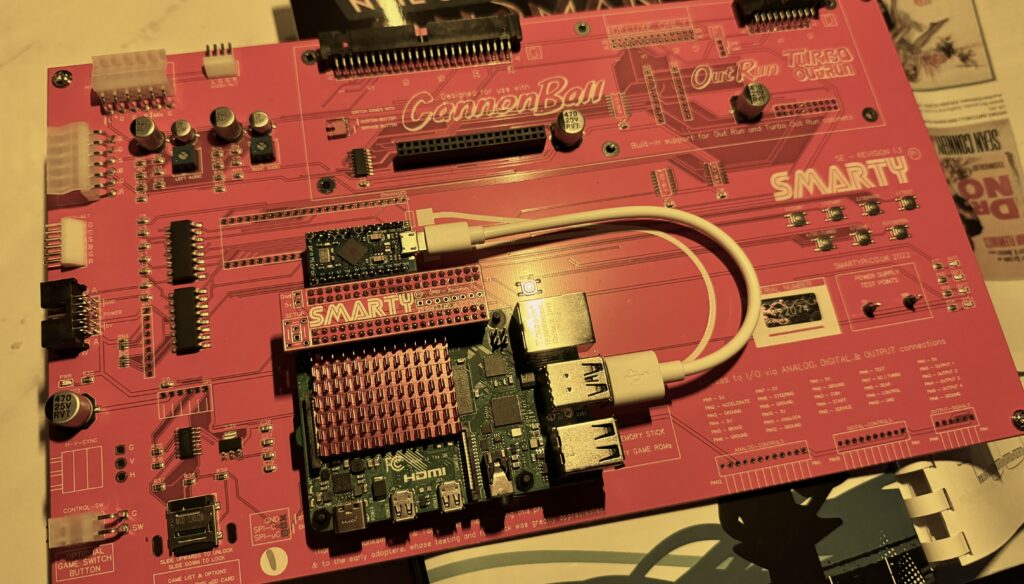
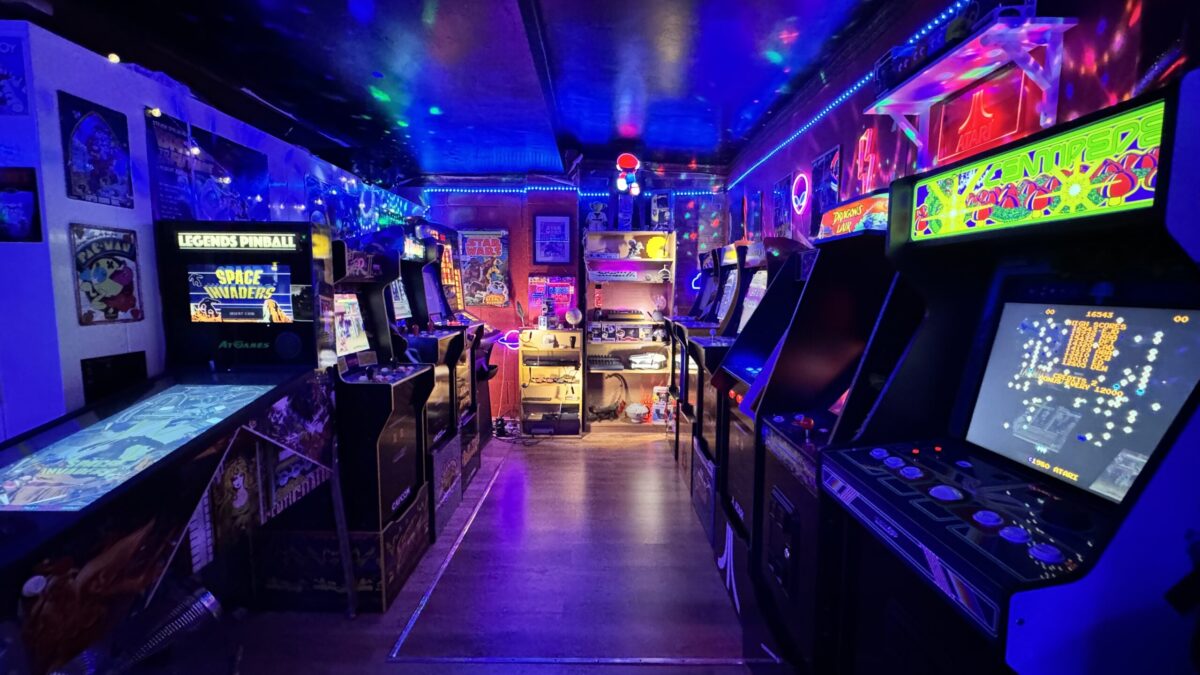
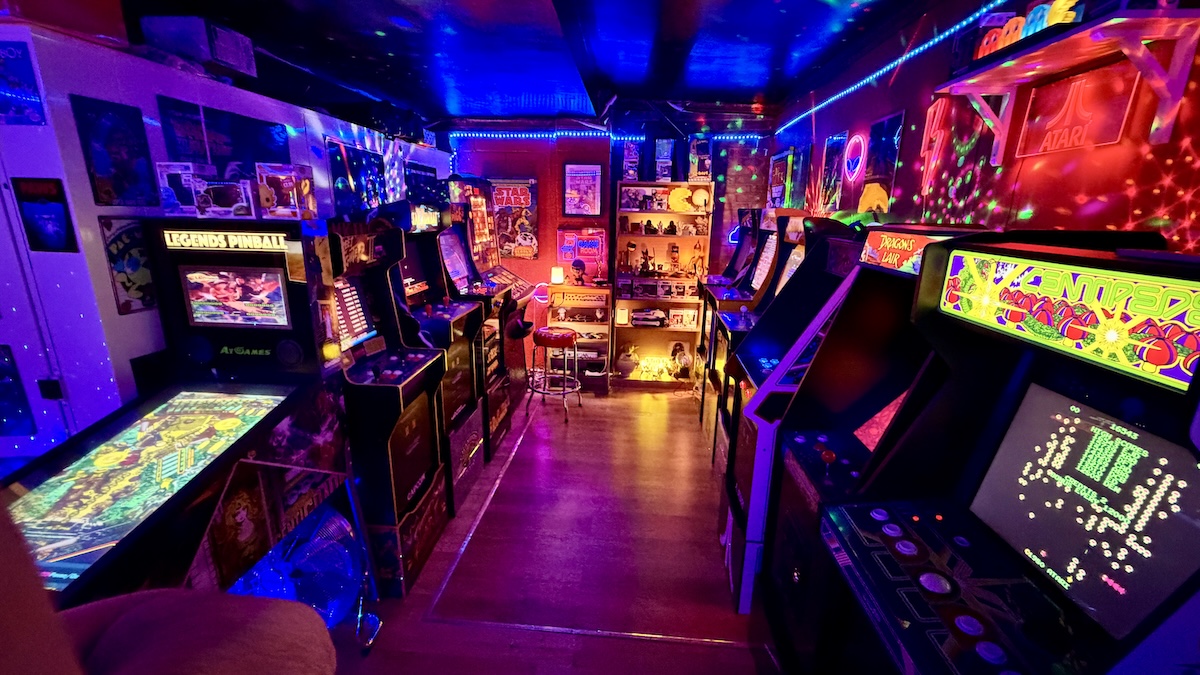
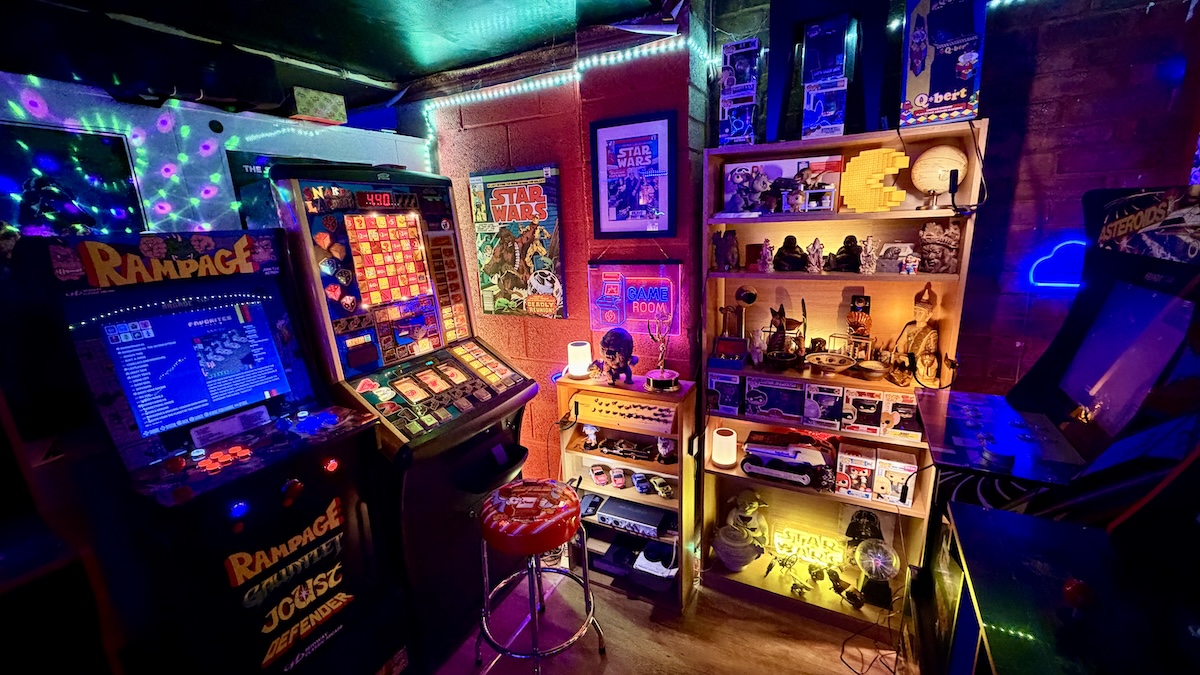
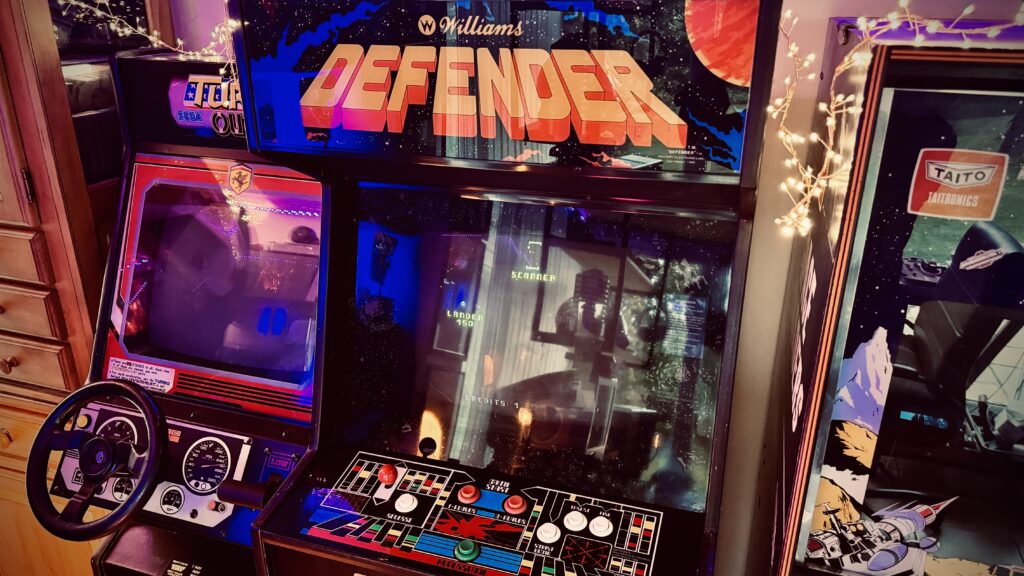
The ongoing war with my younger self has intensified in recent years, brought on by the frustrating availability of newer, fully-licensed ‘replicas’ from the likes of Arcade 1Up and AtGames. These cabinets – lacking CRT monitors and being flimsier than the vintage arcade machines they seek to emulate – are appealing for the casual arcade fan and, unlike some other solutions, don’t rely on the acquisition of illicit ROMs in order to work. I’ve had a few of these imported from the US, and enjoy them very much. Brought together in a dimly lit room, side by side with the real thing, they successfully manage to create a welcoming and pretty convincing arcade vibe. They sound the part, too, producing the kind of unmistakable arcade soundscape – some might say, cacophony – I fondly remember from the ’80s and ’90s.
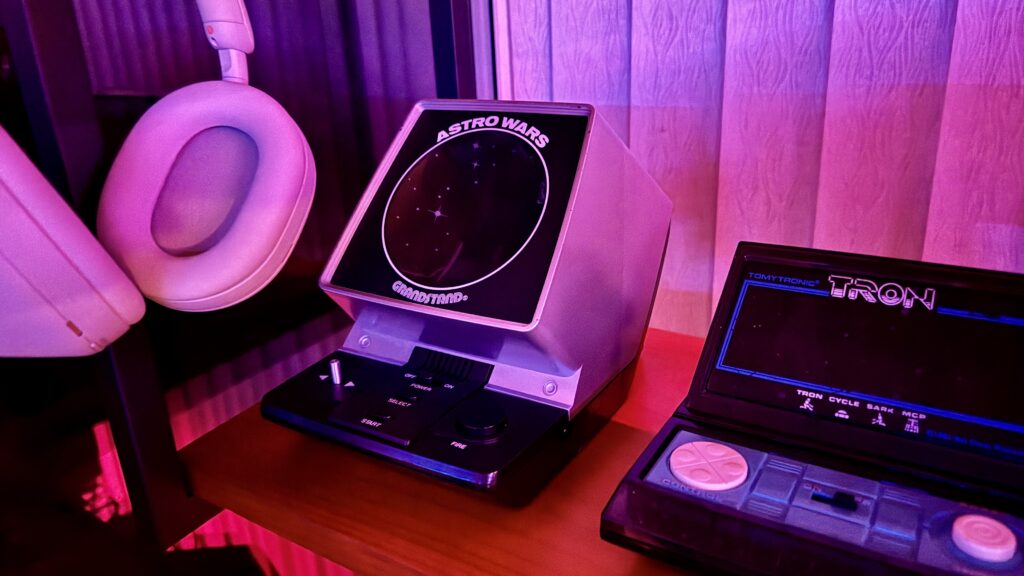
Deemed inauthentic by aficionados and arcade purists – understandably so – I wonder if some of these newer replicas (and I use that word loosely) will themselves end up collectible some day, much in the way the many cheap, plastic tabletop games of the 1980s (such as the likes of Grandstand’s Astro Wars) have done since they hit the scene.
As a kid, I can remember purists scoffing at those, too. Yet, now, these little devices are considered vintage collectibles.
Or should that be ‘retro’ collectibles? I’ve never really been clear as to the exact meaning of these words. Does retro mean old or something more akin to new old – i.e. styled after older products?). ‘Vintage’ – I’m assuming – means actually old.
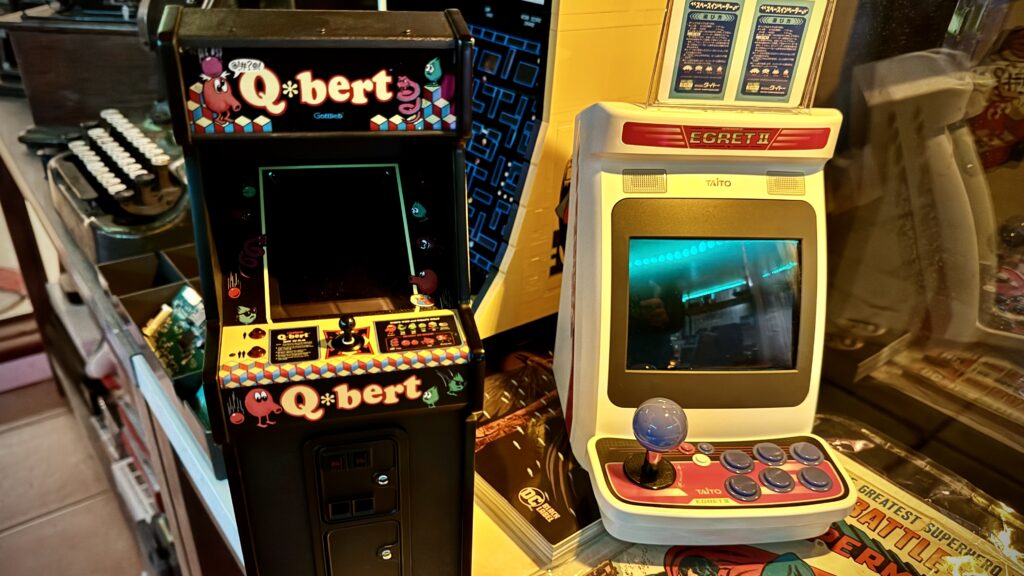
Given enough time, almost anything powered by electricity – toasters included – eventually seems to acquire a degree of retro tech charm, serving as a reminder of just how subjective and age-related collecting can be. Innovation and quality motivate part of the interest, of course, but nostalgia, cultural impact during one’s formative years, along with generational influences, appear to play a greater role.

WHERE ARE ALL THE ARCADE MACHINES?
Much old tech ends up in landfill, and it seems that in previous decades many ancient arcade machines have met the same fate. Were that not the case, there would surely be far more of them in circulation, especially given how many of the things used to exist.
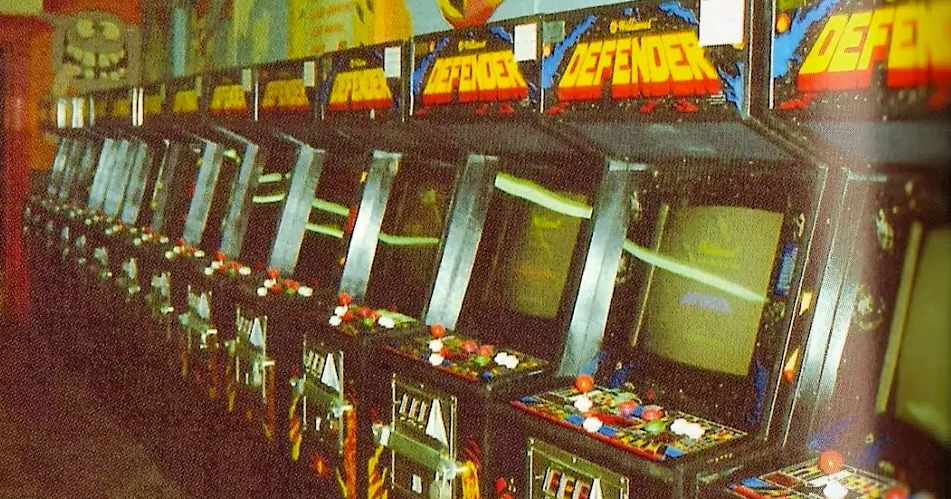
I’ve heard it said that, after arcade machines fell out of fashion and became commercially unviable to arcade owners during the late 1980s, some of them proved difficult to even give away. Many were thrown out, burned, or even dropped into the sea (really).
How deranged would someone need to be to drown an arcade machine?
Many arcade machines simply fell into disrepair, with some now so old that sourcing the custom-made replacement parts needed for fix them has become challenging. The ongoing maintenance of CRT monitors in particular appears to be a significant problem, as they are scarcely manufactured today and few people appear to possess the skills required to repair them. If the tech repair industry has any real-life wizards, then the CRT repair people – who deal in actual plasma – are among them.
WHAT – OR WHEN – IS RETRO?
This is a difficult question, and one I don’t feel qualified to answer, but according to the podcast, This Week in Retro – of which I am a keen listener – “retro” (in gaming, at least) is defined as anything released up to and including the Playstation 3 console.
That’s for now, anyway, as the goalposts are always moving.
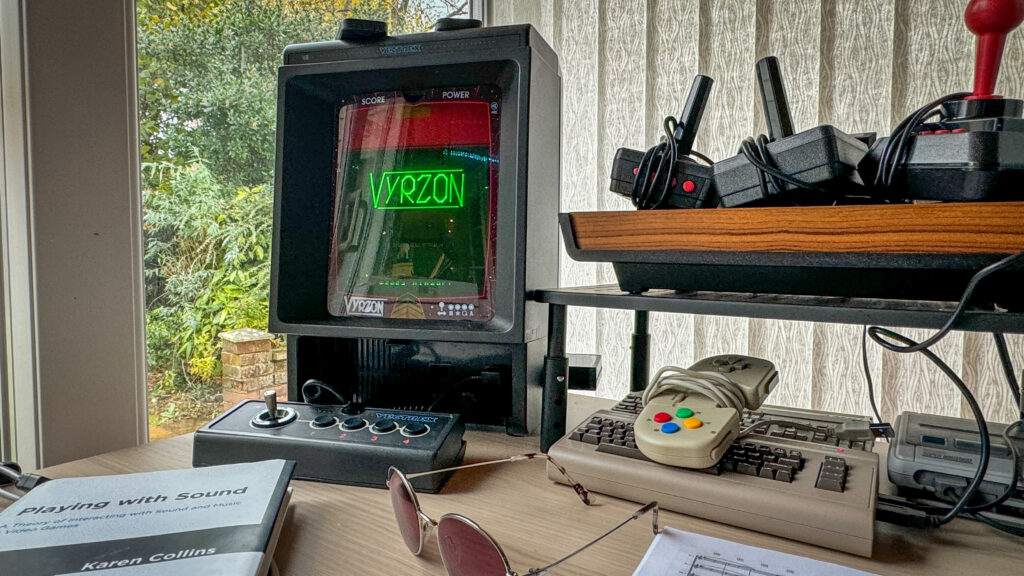
Slightly off-topic, but I learnt recently that several of the games I worked on earlier in my career are now considered vintage or retro, which I have mixed feelings about. Some of the people who write to me with questions about them are much younger than me, and often grew up during the period in question. This, I think, says a lot about the nebulous definition of “retro”: a lot of the time, it’s simply the stuff we grew up with.
This also highlights a concern I have with the retro scene in general, much as I love it, and a pitfall that can exist among its enthusiasts and organisations: the risk of becoming cliquey or gatekeeping, with each demographic seemingly convinced that only it can define what truly counts, or what has merit. In music, for example, this might explain why some older Gen Xers tend to regard chip music as the quintessential form of game music – while, say, many millennials may think instead of orchestral scores, or the music of Final Fantasy, as embodying it. Neither view is wrong, but I do wish parts of the established scene would open their minds a bit to the underlying processes that shape our ideas of nostalgia. If they could loosen their definitions, they might attract a broader audience than middle-aged men and ageing IT professionals reliving their youth (not that there is anything remotely wrong with doing that).
home computers
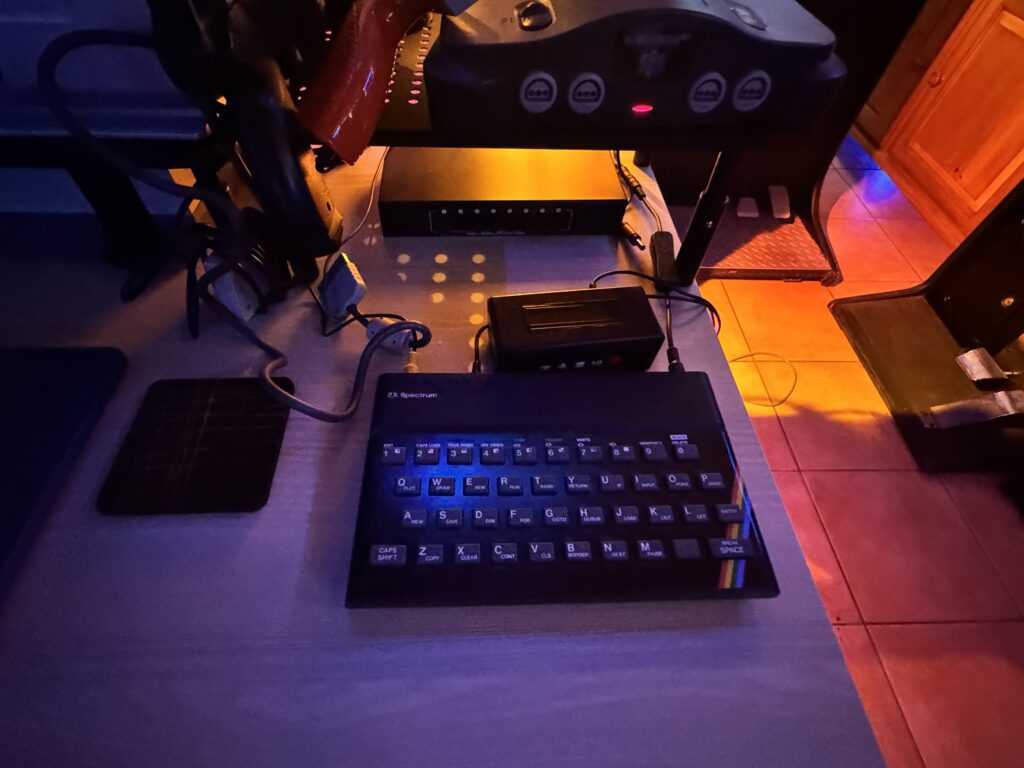
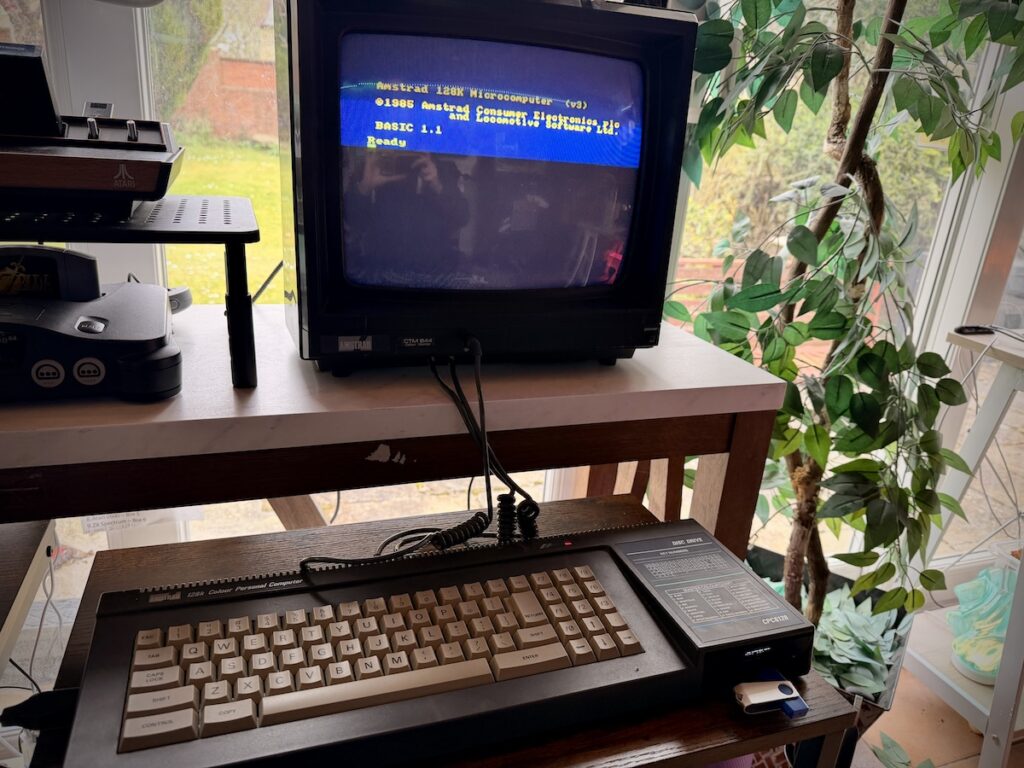
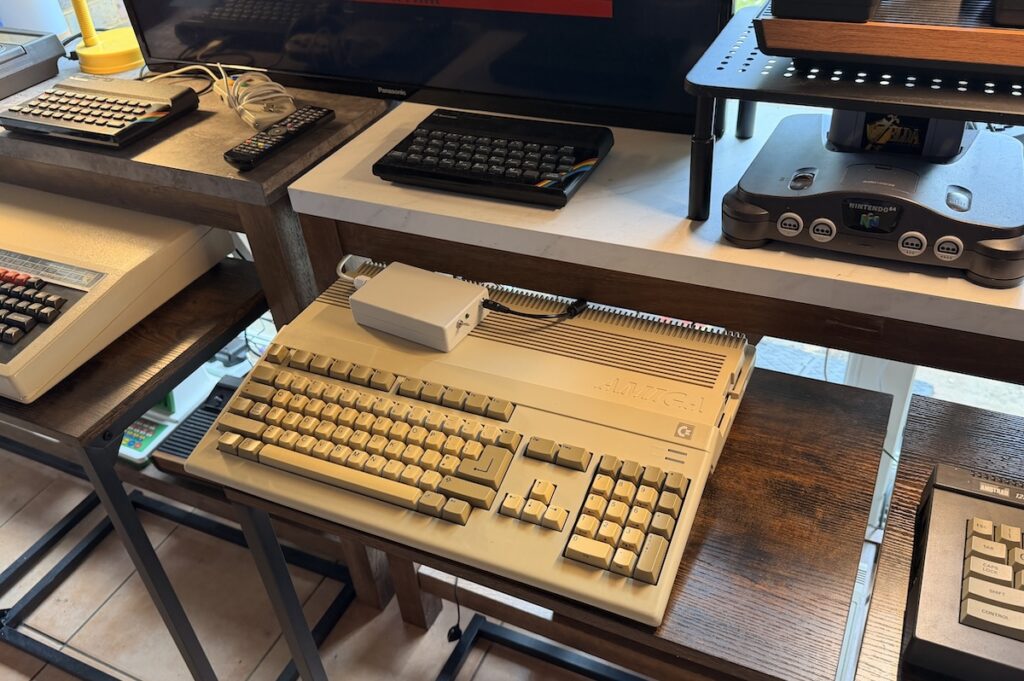
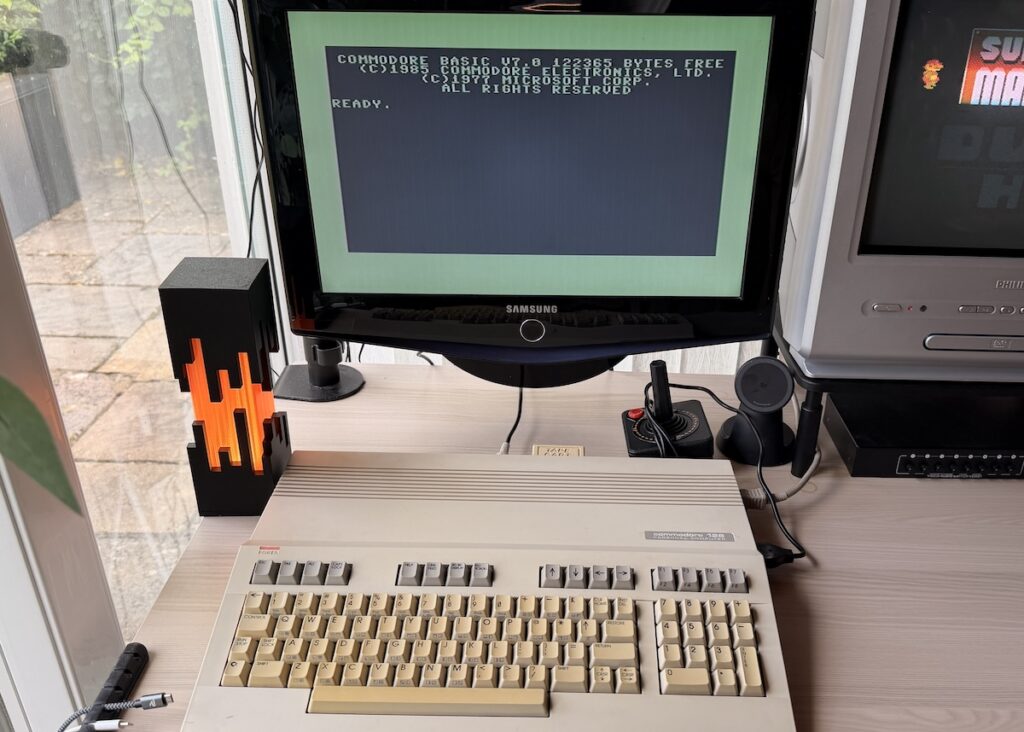
For me, the retro gaming and home computing era began in the late 1970s and early 1980s, marked by the golden age of arcades, the rise of consoles such as the Atari 2600, and the emergence of home computers like the Sinclair ZX Spectrum, Commodore 64, and, a little later, the Amiga. While many would certainly think of the 286, 386, and 486 PCs that followed as having vintage appeal now, I felt that the magic had started to fade a little by that time, even as PC games and productivity in general began to thrive.

SPACE WARS
Living in the UK, where space is at a premium for the majority of people, I count myself lucky to have an arcade or “nostalgia room” of any description.
Perhaps it’s a general lack of free space found in UK homes that explains why home arcades have never really been a thing here, and probably never will be. For many on these islands, simply accommodating a new coffee machine or toaster presents a huge challenge, so it’s no wonder few arcade cabinets enter UK homes.
In contrast – if YouTube is any indicator – it would appear that the average suburban house in America can accommodate an entire cinema, arcade, bar and bowling complex. Even the coffee machines and toasters get their own rooms.
THE MAGIC OF THE GOLDEN ERA
Arcades of the 1980s, as I recall, were an assault on the senses from the moment you entered them, providing not only solo gaming but a social and competitive experience as well. A place to huddle with friends in the warm glow of CRT monitors, eagerly competing on games such as Outrun, Space Invaders, Pac-Man, Defender, Star Wars, Battlezone, Pole Position and countless other era-defining classics.
These glorious establishments have always been more than just a collection of machines , offering immersive experiences that are greater than the sum of their parts. With deceptively simple designs built-into the very fabric of their cabinets – much like Nintendo’s synergistic approach to hardware and game creation – arcade machines were made to function as a cohesive whole: a magical combination of aesthetics, hardware functionality and gameplay mechanics. They were – and continue to be – a celebration of the sensory experience of gaming, and an unforgettable fusion of art, design, and technology.
In an era of games industry saturation and emulation-based machines boasting thousands of games, there’s something pretty compelling about the idea of an arcade cabinet that plays just one game very well.
With few menus to negotiate and no compatibility issues to contend with, vintage arcade machines remind me of the relatively uncomplicated, uncluttered pre-internet era of gaming – a time when it felt as though every big new title – or film or TV show, for that matter – became an event shared by millions.
During the ’80s in particular, the eye-catching cabinets on offer – with their vibrant side art, striking marquees, attract modes and unique control schemes – managed to lure in millions of players in on an epic scale, every day of the week.

There are still establishments offering an ’80s-style arcade experience in the UK today, thankfully, but they are few and far between. One great one, quite local to me, is Arcade Archive, which can be found just outside Stroud in Gloucestershire. Situated beside The Cave – a fantastic, hands-on retro tech museum – both are well worth visiting. Together they form The Retro Collective.
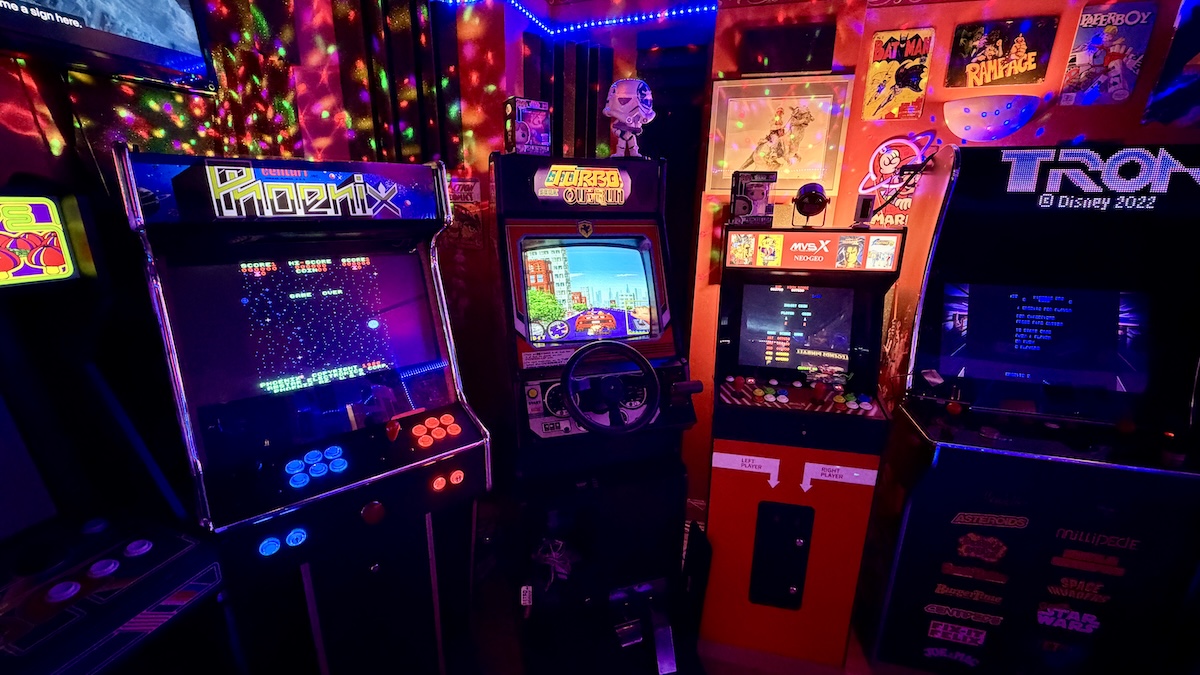
As I play – and revel in the sound of – classics such as Space Invaders and Defender in my studio arcade, I’m reminded of the immediacy and accessibility of the gaming experiences arcades used to offer, and I marvel at their enduring, cross-generational appeal – even now, in the era of photorealistic graphics and VR technology.
The arcade games of old epitomised the very essence of casual gaming: easy to learn, hard to stop playing, difficult to master - serving now not only as a lesson in gaming history and a nostalgic reminder of a bygone era, but also as relief from some of today’s more complex and convoluted gaming experiences.
The allure of these games is magnified a little by the realisation that they laid the foundations of an entire industry – an entire art form, even - establishing many of the ground rules and conventions that still hold sway today. Their lasting appeal isn’t only about the games themselves, then, but the cultural impact many have had as well, and the very fact they were the first. – JH